Comparisons14 June 2026
Tally runs the books, but it lives on a desktop, and distribution happens in the field. A handful of mobile add-ons try to bridge that gap. They are not all the same product. Sorting them by the job they actually do, from viewing to collecting, makes the choice obvious for where your business is.
Read post →
Comparisons14 June 2026
BharatPe built its name on a 0% MDR UPI QR, and that claim is honest. UPI person-to-merchant payments carry no MDR for anyone right now. The real question for a distributor is not the fee. It is whether a generic QR knows which of your Tally invoices the money just settled.
Read post →
Comparisons14 June 2026
BUSY is a solid desktop accounting and inventory package, and plenty of distributors compare it head to head with Tally. The more common real question is different. The distributor already runs Tally and wants the mobile collection layer that no desktop accounting package, BUSY or Tally, was built to be.
Read post →
Collections14 June 2026
A Barpeta distributor sends invoices on WhatsApp, then chases the same parties for payment a week later on the same WhatsApp. The invoice and the money live in two separate conversations. Collecting payment against a Tally invoice in one WhatsApp thread closes that gap. Here is the loop, party by party.
Read post →
Tally Mobile14 June 2026
A Barpeta distributor installed a free Tally mobile app, loved seeing outstanding on his phone, then hit the wall the first time he tried to log a ₹42,000 receipt and could not. The free tier showed him the problem and could not let him fix it. Here is the honest line between free and paid.
Read post →
Market Reality14 June 2026
A Guwahati FMCG distributor doing ₹6 crore a year on a 1% gateway loses ₹6,00,000 to MDR annually, the cost of two salesmen, to receive money he already earned. Working out how much distributors lose to MDR every year is the fastest way to see where a 0% rail pays for itself.
Read post →
How-To14 June 2026
A Guwahati FMCG distributor leaves the office at 9 AM and does not see his Tally screen again until night. By the time he checks a party's ₹1,40,000 outstanding, the salesman has already given fresh credit. Here is how to put that Tally data on the phone, step by step, across the four ways that actually work.
Read post →
How-To14 June 2026
A salesman in Guwahati collects ₹87,000 across four parties before lunch, scribbles the amounts on the invoice copy, and the accountant types them into Tally at 9 PM. Two get matched to the wrong invoice. Recording the payment in Tally on mobile, the moment it lands, ends that. Here is the exact flow.
Read post →
Tally Mobile14 June 2026
A distributor in Dibrugarh spent a week searching the Play Store for the 'real' Tally app, sure he was missing it. He was not. There is no official Tally mobile app, and once you accept that, the right choice gets a lot clearer. Here is what every path actually is.
Read post →
Market Reality14 June 2026
Three retailers each paid a Barpeta distributor ₹14,320 on the same afternoon and all three sent a WhatsApp screenshot. UPI moved the money for free. Working out which screenshot cleared which invoice cost the accountant an hour. Is UPI free for merchants? The payment is. The mess around it is not.
Read post →
Comparisons14 June 2026
Marg ERP is a capable desktop billing and inventory system, strong in pharma and FMCG distribution. The question most distributors actually ask is narrower. They already run Tally and want the field collection and reconciliation layer Marg's desktop core was never built to be.
Read post →
Comparisons14 June 2026
myBillBook is a clean mobile billing app, and for a small shop with no accounting system it is a fine place to start. For a distributor who already runs Tally, the trade is different. Billing apps ask you to keep your real numbers in a second place, away from the books your CA files from.
Read post →
Collections14 June 2026
A Dibrugarh distributor raises every invoice in Tally already. The gap is that collecting against it means a separate gateway taking a cut. Nil MDR UPI collection on Tally invoices closes that gap: the link rides on the invoice, the money lands whole, and the receipt posts itself back.
Read post →
Comparisons14 June 2026
OkCredit replaced the paper udhaar book with a phone, and for a small shopkeeper that was a real step forward. A distributor running 100 retail parties on Tally needs more than a digital khata. The balance has to tie to a GST invoice, and the payment has to land back in the books.
Read post →
Market Reality14 June 2026
Plenty of apps say 'zero MDR'. Read the fine print and one charges ₹3 a transaction, another routes UPI through a paid gateway, a third does not touch Tally at all. A zero MDR UPI app that is genuinely free and posts back into Tally is rarer than the marketing suggests. Here is what to actually check.
Read post →
Comparisons14 June 2026
A Guwahati distributor signed up for a payment gateway that quoted '1% and nothing else.' A year later, between MDR, a monthly platform fee, and a per-transaction charge, the real cost was closer to ₹2.6 lakh on ₹2 crore collected. Payment gateway charges are rarely the one number on the brochure.
Read post →
Comparisons14 June 2026
Paytm for Business is a strong payment-acceptance product, built for the counter, the soundbox, and a wide spread of payment instruments. A distributor's question is narrower than payment acceptance. It is whether the receipt knows which Tally invoice it just settled, and gets there on its own.
Read post →
Comparisons14 June 2026
Razorpay is an excellent payment gateway, built for online businesses and developers who want a payment link or a checkout in their app. A Tally distributor is neither. They want the payment tied to a bill in Tally, collected without a platform fee, and posted back to the books on its own.
Read post →
Tally Mobile14 June 2026
A Guwahati distributor's three salesmen all carry ₹8,000 Android phones, not laptops. He wants Tally on those phones and keeps hitting the same wall: there is no Tally app to install. Here is what a Tally mobile app for Android really is, what syncs to the phone, and what it can and cannot do against the office machine.
Read post →
How-To14 June 2026
A Guwahati accountant stays back every night to match the day's UPI credits against invoices in Tally. Forty receipts, ninety minutes, two errors. Moving Tally payment reconciliation onto mobile with auto-matching turns that ninety minutes into zero. Here is how the matching actually works.
Read post →
Comparisons14 June 2026
A distributor on a Barpeta route opens AnyDesk to check a party's ledger and waits 40 seconds for the screen to draw on a 2G connection. By then the retailer has moved on. The same check on a native companion app loads from cache in under a second. This is the real gap between Tally remote access and a mobile app.
Read post →
Market Reality14 June 2026
A Dibrugarh distributor assumed all his UPI collections were free, then noticed a quiet ₹3-per-receipt fee on his collection app. Across 6,000 receipts a year that is ₹18,000 he never agreed to. UPI MDR charges are mostly zero, but the fine print is where distributors bleed.
Read post →
Comparisons14 June 2026
A Guwahati distributor collects in all three: cash that leaks and needs counting, the rare card that costs 1.5%, and UPI that should be free but is not on his current app. Laying the UPI vs card vs cash collection cost side by side shows where the money and the hours actually go.
Read post →
Tally Mobile14 June 2026
A Dibrugarh distributor's wife runs the books while he runs the routes. He calls her six times a day to ask one question: what does this party owe. Putting Tally reports on mobile ends those calls. Here is exactly which reports a distributor reads from the phone, and where viewing stops being enough.
Read post →
Market Reality14 June 2026
A Guwahati distributor collecting ₹2 crore a year on a payment gateway at 1% MDR pays ₹2,00,000 a year just to receive his own money. He never sees the line item because it is netted off before the money lands. Understanding what MDR is, is the first step to stopping that leak.
Read post →
Collections14 June 2026
An FMCG distributor in Guwahati collects from 220 kirana stores a day, most paying ₹3,000 to ₹15,000. A ₹3 per-transaction fee on that volume is ₹1,98,000 a year, even at 'zero MDR'. For FMCG, the per-receipt fee hurts more than the percentage. Zero MDR UPI for FMCG distributors only counts if it is truly zero.
Read post →
Collections14 June 2026
A pharma distributor in Guwahati runs on 4-5% margins and waits 60-75 days to get paid by chemists. A 1% MDR on his ₹8 crore turnover is ₹8,00,000 a year, a fifth of a margin point he cannot spare. Zero MDR UPI for pharma distributors is not a nice-to-have; it is margin he keeps.
Read post →
Comparisons14 June 2026
Zoho Books is a clean cloud accounting product, and its mobile access is genuinely better than a desktop ledger sitting in the office. For a distributor on Tally, the pull toward Zoho is usually about reaching the books from a phone. That specific gap can be closed without moving your accounting to the cloud at all.
Read post →
How-To6 June 2026
A Nagpur FMCG distributor employs two people whose whole job is receivables: one types invoices from delivery notes, the other matches bank receipts to bills every evening. Accounts receivable automation does not fire those two people. It moves them off data entry and onto the retailers who actually need chasing.
Read post →
How-To6 June 2026
A distributor in Rajkot used to keep a diary of who to call for payment. Some days he called, some days he forgot, and the retailers learned which suppliers chased and which did not. Automating payment reminders takes the diary out of his head and turns it into a system that never forgets and never sounds the same twice.
Read post →
Comparisons6 June 2026
A distributor evaluating CredFlow usually is not looking for a clone. They are looking for a tool that fits a Tally-anchored, field-heavy, UPI-collecting business. This is an honest roundup of the credflow alternatives worth shortlisting in 2026, and where each one actually fits.
Read post →
Tally Mobile6 June 2026
Most Tally mobile apps stop at showing you the outstanding report on a phone. For a distributor with ₹1.5 crore floating across 200 retail parties, reading the number is the easy part. The best Tally app for receivables is the one that closes the loop from invoice to collection to reconciliation.
Read post →
Tally Mobile6 June 2026
Most Tally mobile apps read from Tally and stop there. You see yesterday's data on the phone, but anything you do on the phone never makes it back. Bidirectional Tally sync is the difference between a mirror you can only look at and a workspace you can actually act in.
Read post →
Comparisons6 June 2026
Three tools come up again and again when a Tally distributor looks for a collection app: CredFlow, Biz Analyst, and Takkada. They are built around three different ideas of the job. This is the full three-way comparison, with the single matrix a distributor needs to decide.
Read post →
Market Reality6 June 2026
A distributor comparing collection tools usually finds the real cost hidden in the MDR, not the sticker price. Takkada pricing is built the other way around: a flat annual subscription you can read off a table, and 0% MDR on UPI so the collection rail itself adds nothing per transaction.
Read post →
Comparisons6 June 2026
A ₹14 crore electricals distributor in Indore is choosing between two receivables tools for the next two years. The decision comes down to four things: what UPI collection costs, whether his salesmen can invoice from the phone, how deep the Tally sync runs, and what happens at 9 PM when receipts have to be matched.
Read post →
Tally Mobile6 June 2026
A Guwahati FMCG distributor with 180 retail parties spends his evenings asking the same question: which retailer paid today, and which invoice did the money settle. Takkada is the app that answers it from his phone, and posts the receipt back into Tally before he gets home.
Read post →
Collections6 June 2026
Every Indian retailer already lives in WhatsApp. The invoice, the reminder, and the payment do not need three different channels. This is the playbook for running the whole collection cycle inside the one app the retailer already checks fifty times a day.
Read post →
Collections18 May 2026
A distributor who invoices ₹1 crore in a month and collects ₹85 lakh that month has a collection efficiency of 85%. The number sounds technical. What it actually measures is whether the credit being extended is coming back as cash on the schedule the business needs.
Read post →
Comparisons18 May 2026
CredFlow is a serious B2B receivables product with strong analytics. For a ₹5–30 crore distributor running on Tally, the gaps that matter are pricing on UPI collections, salesman-side invoicing on the phone, and how cleanly receipts land back inside Tally.
Read post →
Collections18 May 2026
A pharma distributor in Nagpur with ₹8 crore annual turnover and a 72-day DSO is floating ₹1.58 crore in unpaid invoices at any given moment. Cut that to 45 days and ₹60 lakh comes back into the business — no new customers, no extra sales.
Read post →
Field Sales18 May 2026
A salesman who calls back to the office to check if 200 cartons of detergent are in stock has already lost the order. A field order collection app for Tally puts live stock, prices, and credit limits in his hand, so the order is closed at the retailer's counter.
Read post →
Comparisons18 May 2026
Khatabook helped over 10 lakh kirana shopkeepers track who owes them money. But a distributor with 180 retail parties, GST invoices, and a Tally backbone needs more than a digital bahi-khata. Here is the gap, and what a distributor-grade collection app looks like.
Read post →
Tally Mobile18 May 2026
An Indian distributor often runs three businesses out of one office: a parent FMCG firm, a sister pharma firm in the spouse's name, and a hardware vertical under the son. Three Tally companies, three sets of books, one owner who needs to see all of it on one screen.
Read post →
Collections18 May 2026
A partywise outstanding statement in Tally is the document a retailer disputes against, an auditor relies on, and a collection call references. Sent badly, it gets ignored. Sent with a UPI link, it gets paid.
Read post →
Comparisons18 May 2026
Two distributors with the same ₹15 crore turnover can have wildly different payment collection costs. One pays ₹15 lakh a year in MDR; the other pays ₹0. The difference is the architecture, not the volume.
Read post →
Field Sales18 May 2026
The owner of a Nagpur pharma distributor bought Biz Analyst for his three salesmen in 2023. They used it for four months, then went back to calling the office accountant before every delivery. The problem was not the app — it was that the app could only answer half of the salesman's questions.
Read post →
Collections18 May 2026
A distributor who manually shares invoices on WhatsApp spends 20–40 minutes per day on the task when volumes cross 30 invoices. Auto-dispatch eliminates that entirely and starts the payment clock before the goods arrive at the retailer.
Read post →
Collections18 May 2026
A UPI collection app for distributors in India is not the same as a payment-gateway product. The distributor's job is to collect ₹15,000 from 180 retailers, every week, against Tally invoices. Here is what a UPI collection app built for that workflow has to do.
Read post →
Collections18 May 2026
A WhatsApp invoice that is just a PDF attachment converts 2× slower than a WhatsApp invoice that is a PDF, a one-line summary, and a tap-to-pay UPI link. The format matters as much as the timing.
Read post →
Collections18 May 2026
A distributor in Pune collecting ₹8 crore a year on UPI through a 1% MDR gateway is paying ₹8 lakh annually for the privilege of moving his own money. Zero MDR is not a discount, it is a different payment architecture.
Read post →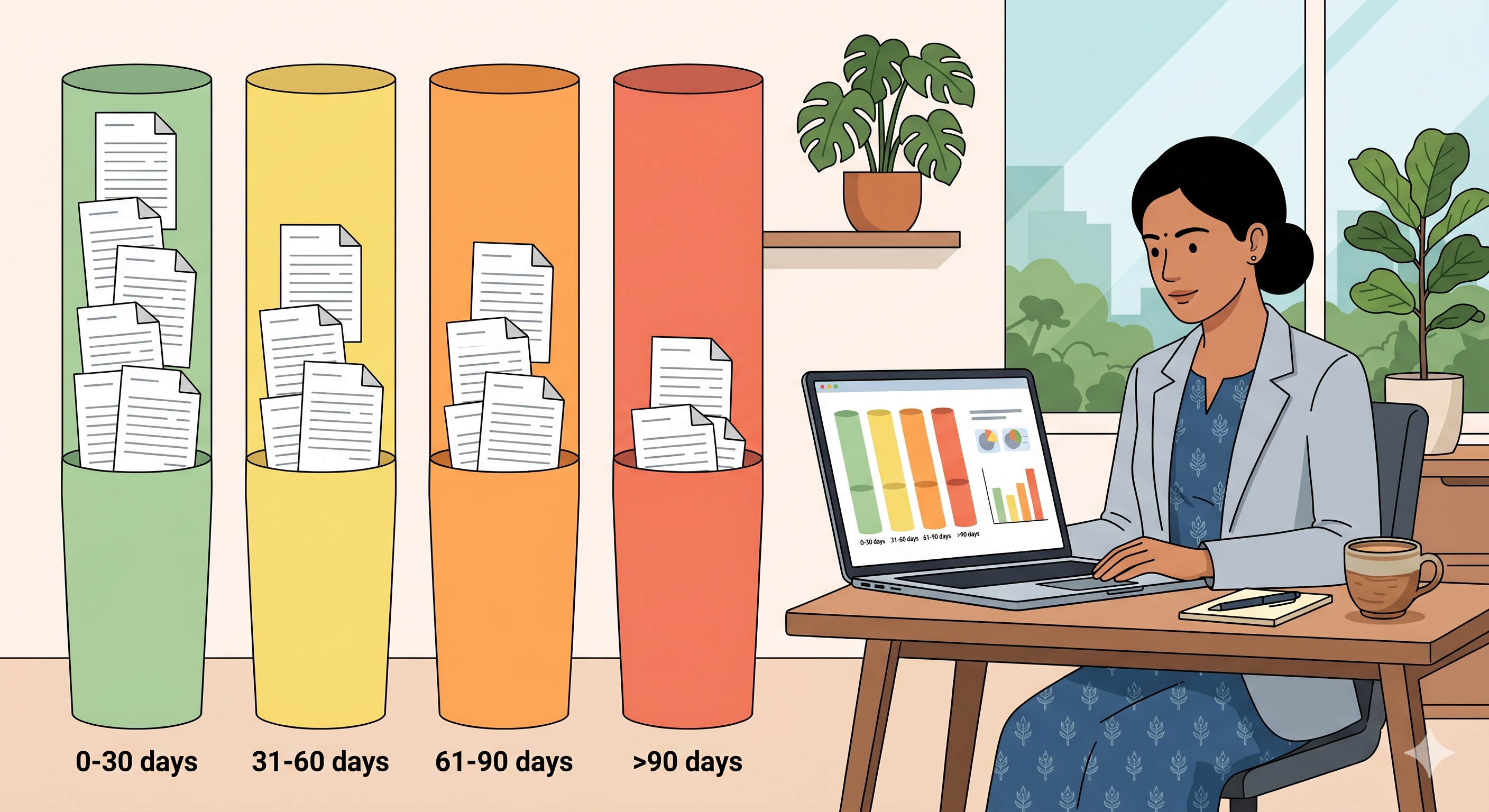
How-To6 May 2026
An aging report in Tally is a list of every open invoice grouped by how long it has been outstanding. The buckets are usually 0 to 30, 31 to 60, 61 to 90, and over 90 days. It is the single most important report a distributor's accountant can pull on a Monday morning.
Read post →
How-To6 May 2026
A bad debt write off is the accounting decision to remove an unrecoverable receivable from the books and recognise it as a loss. Most Indian distributors carry bad debts on their books for years longer than they should, partly out of hope and partly because the GST and income tax treatment is misunderstood. Both choices cost money.
Read post →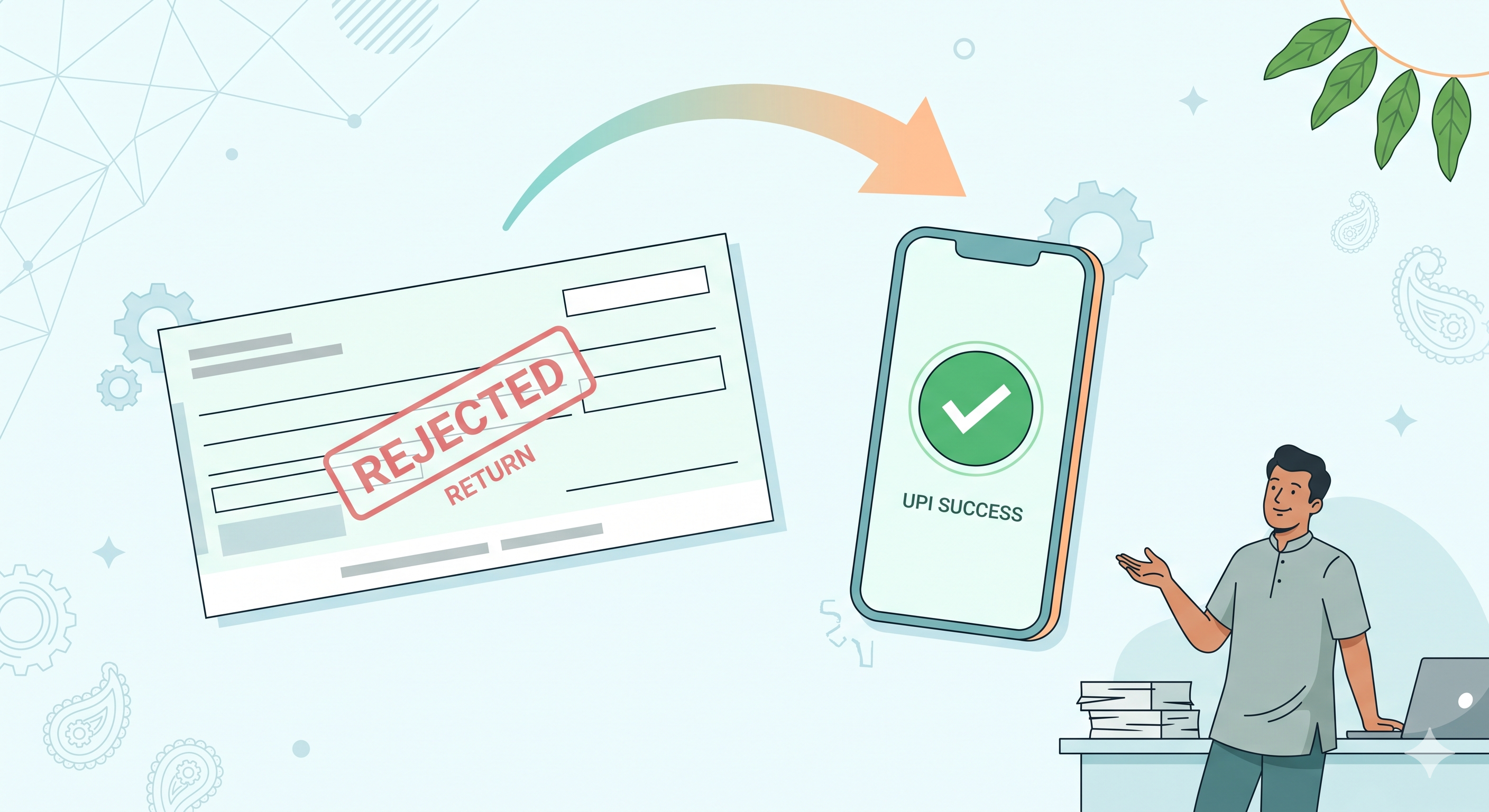
How-To6 May 2026
A cheque bounces when a retailer's cheque is returned unpaid by the bank, usually with the reason "insufficient funds" or "funds insufficient". For an Indian distributor, this is one of the most stressful events in the operating year. The legal remedy under Section 138 of the Negotiable Instruments Act exists, but most distributors either do not invoke it correctly or settle out of fatigue. Both are expensive.
Read post →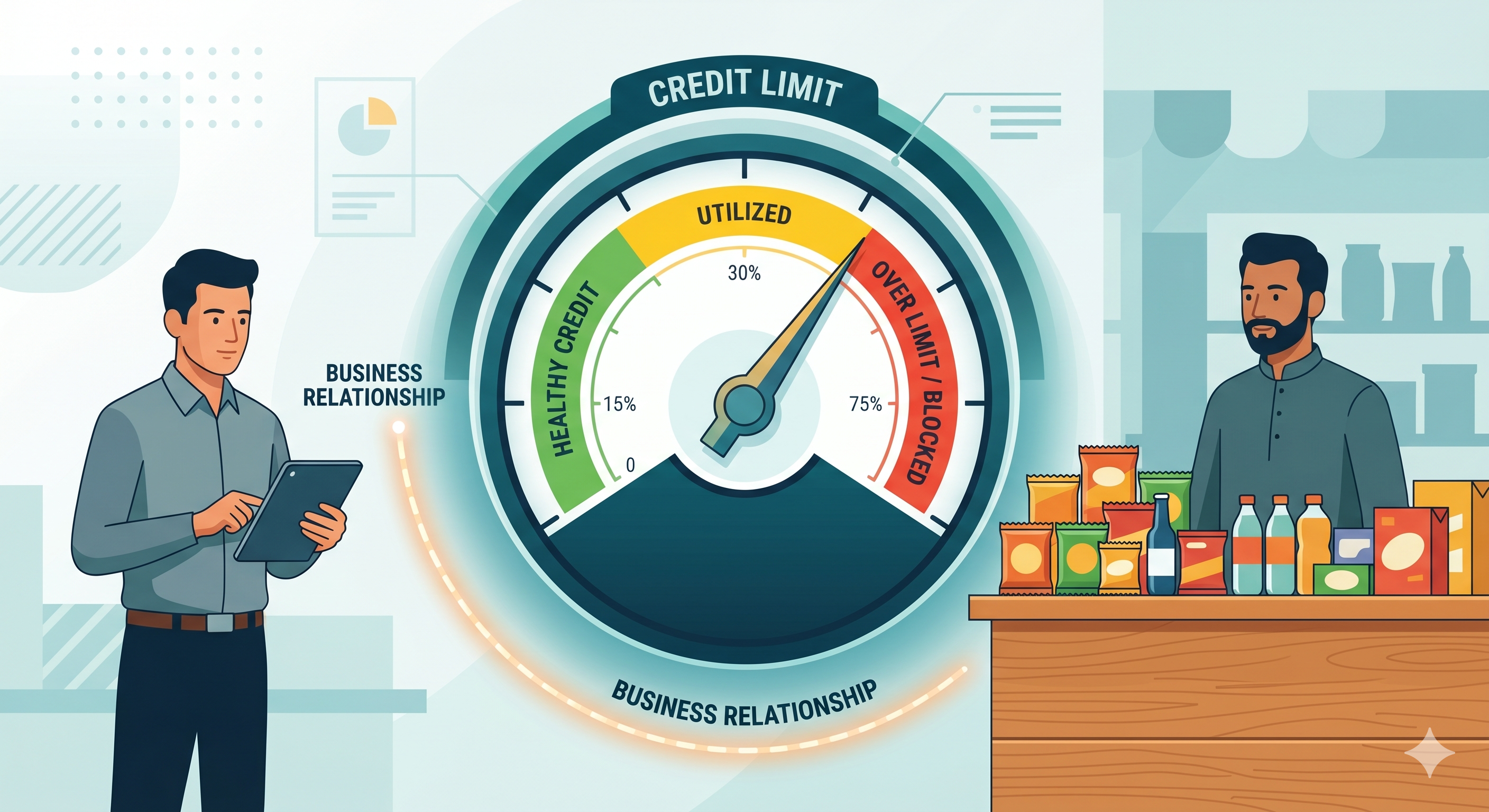
How-To6 May 2026
A credit limit is the maximum amount a distributor is willing to let a single retailer owe at any point in time. It is the most under-used risk tool in Indian B2B distribution. Most distributors set credit limits informally in their head, never enforce them in their software, and only react when a party is already 90 days overdue on a large amount.
Read post →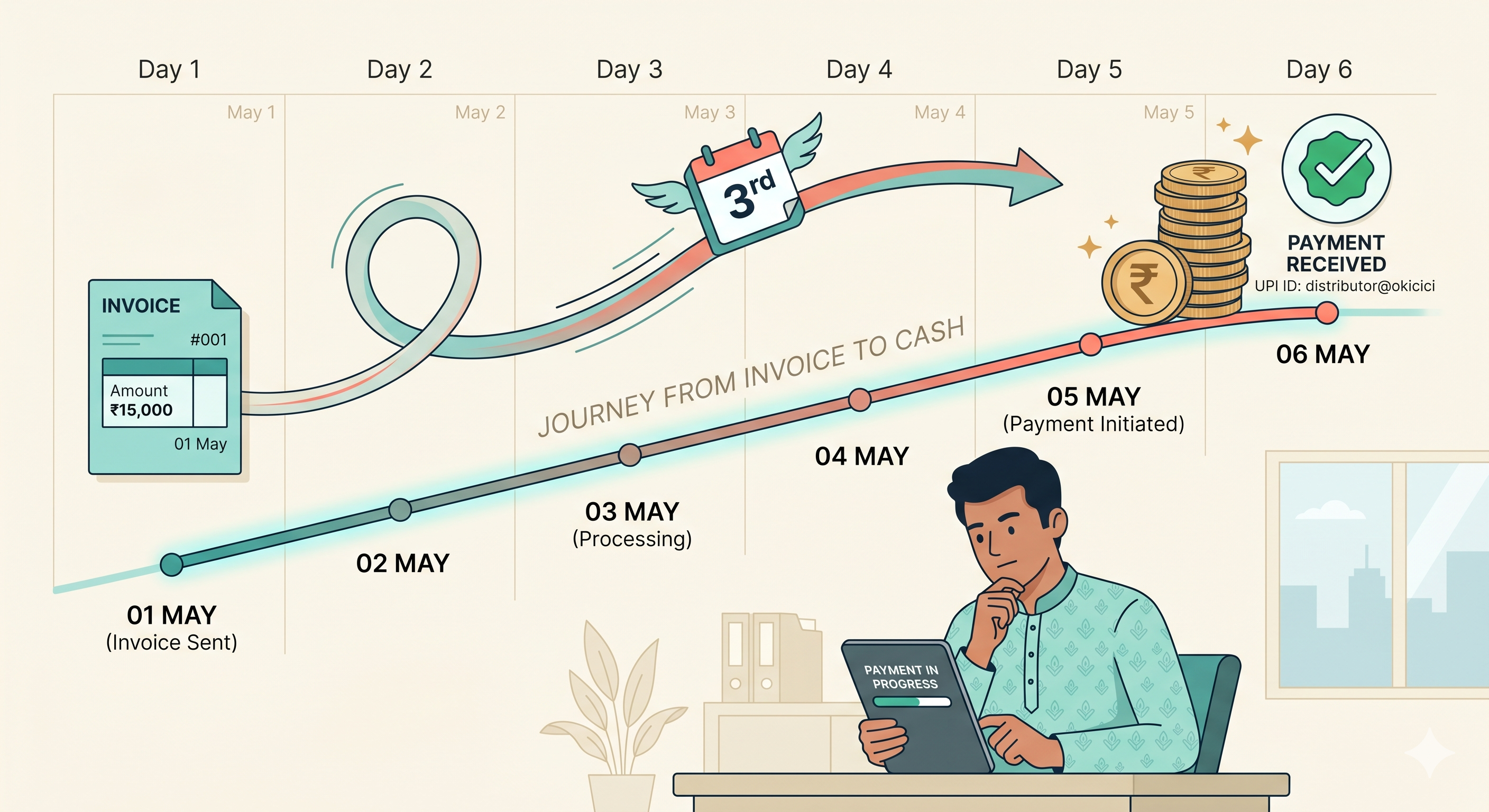
How-To6 May 2026
DSO, or Days Sales Outstanding, is the average number of days a distributor takes to collect cash after raising an invoice. It is the single cleanest number that tells you whether your collections operation is keeping up with your sales team.
Read post →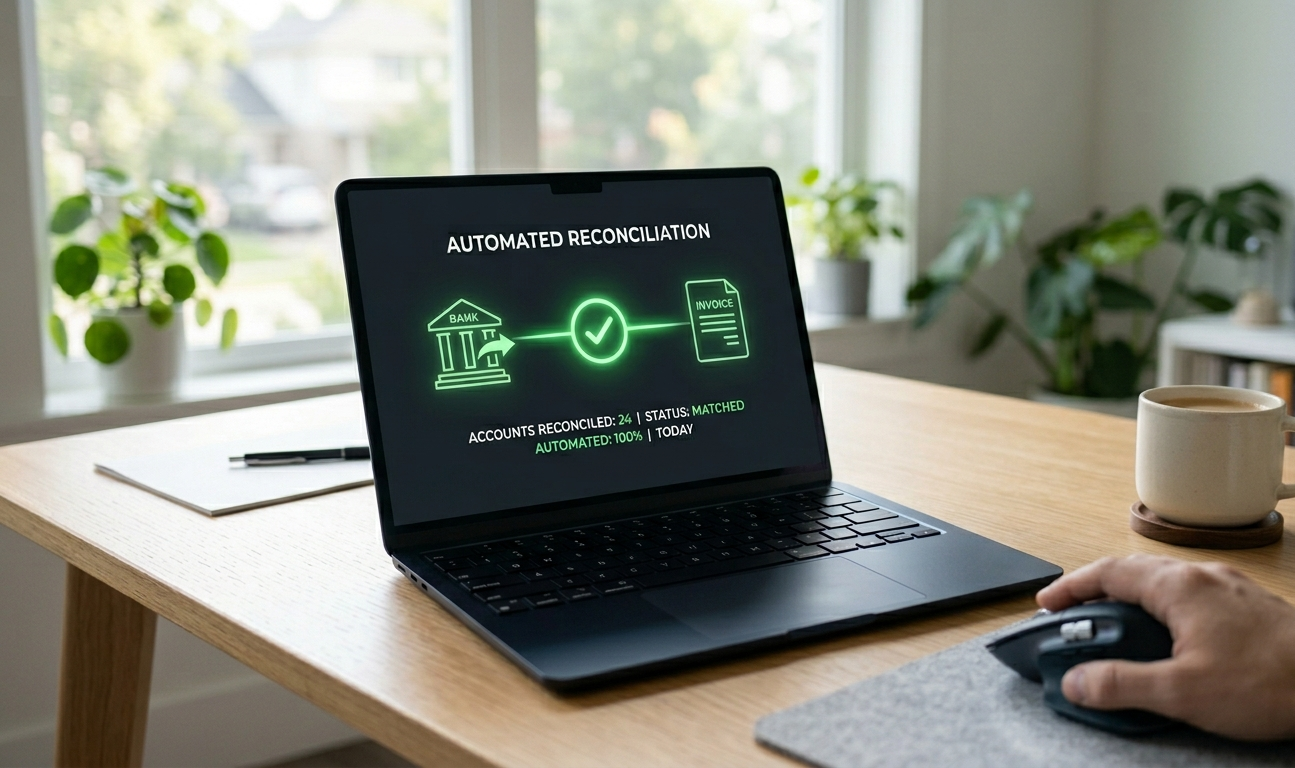
How-To25 April 2026
Auto reconciliation Tally refers to the process of automatically matching incoming bank receipts to outstanding sales invoices in Tally, and then posting receipt vouchers in Tally without human data entry.
Read post →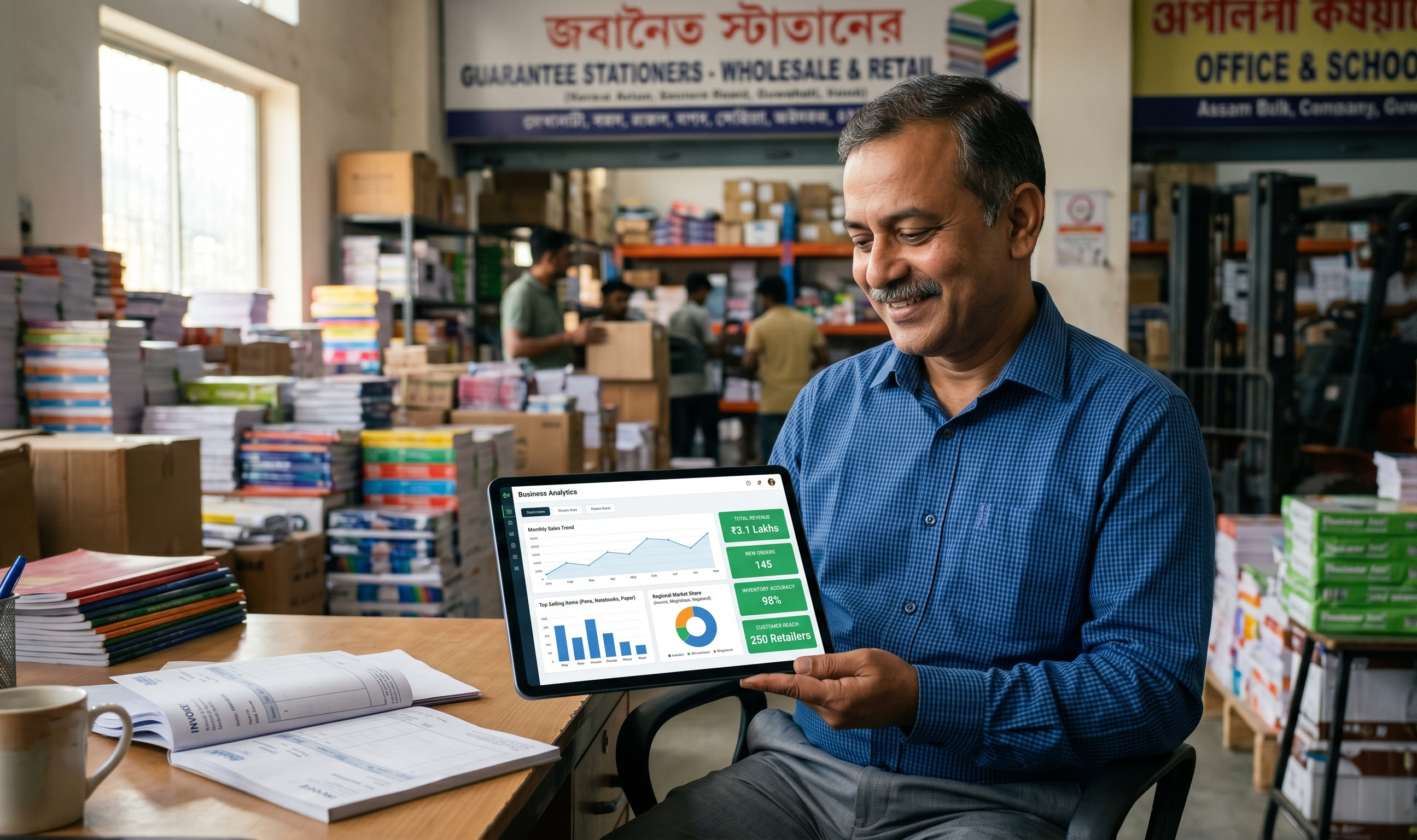
Comparisons25 April 2026
Biz Analyst is no longer just the old Tally viewer stereotype. Its current Business plan bundles dashboard access, reminders, invoice sharing, limited sales-team controls, and data entry, but distributors still outgrow it when collections, reconciliation, and mobile GST workflows become the bottleneck.
Read post →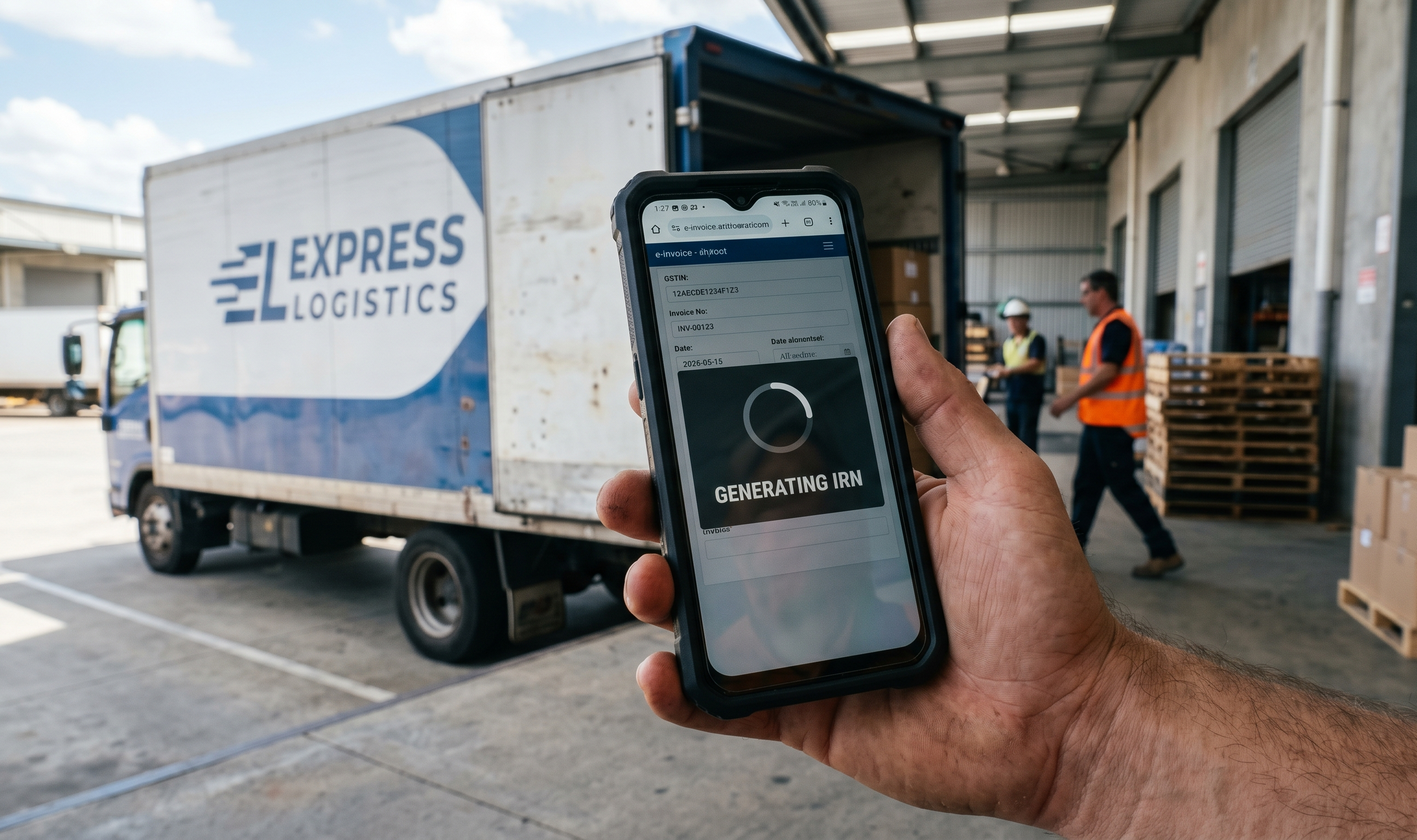
How-To25 April 2026
The Indian government has lowered the e-invoicing threshold in waves: ₹500 crore in 2020, then ₹100 crore, ₹50 crore, ₹20 crore, ₹10 crore, and ₹5 crore as of 1 August 2023. Any B2B invoice from a business above this turnover needs an IRN (Invoice Reference Number) generated through the Invoice Registration Portal before the goods move or the service is delivered.
Read post →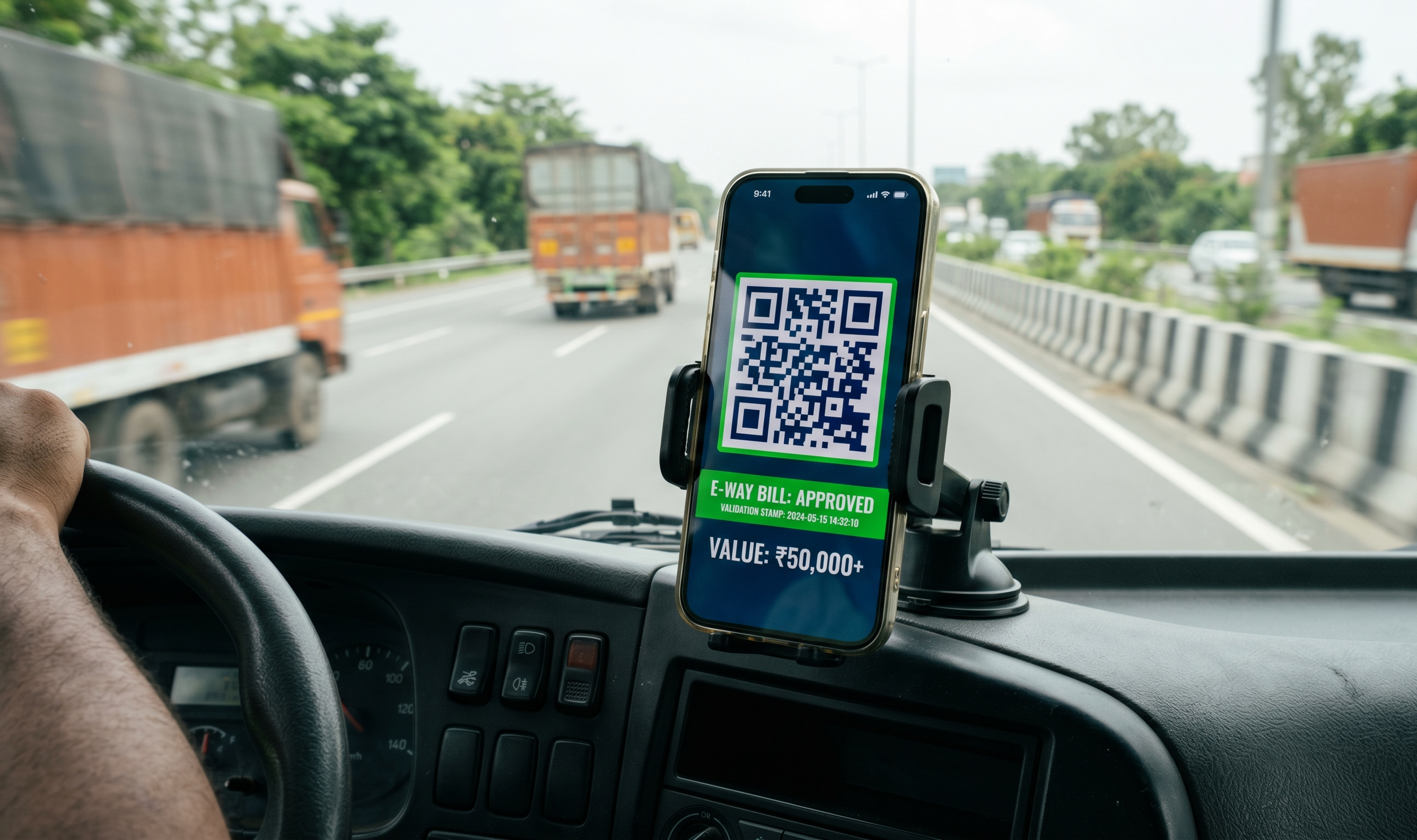
How-To25 April 2026
Under the current GST rules, an e-way bill is required any time goods worth more than ₹50,000 move between two locations on a conveyance. The threshold is ₹50,000 per consignment for most goods, lowered in specific states and for specific sensitive items. All interstate movement above ₹50,000 is covered; intra-state rules vary slightly by state but most follow the same threshold.
Read post →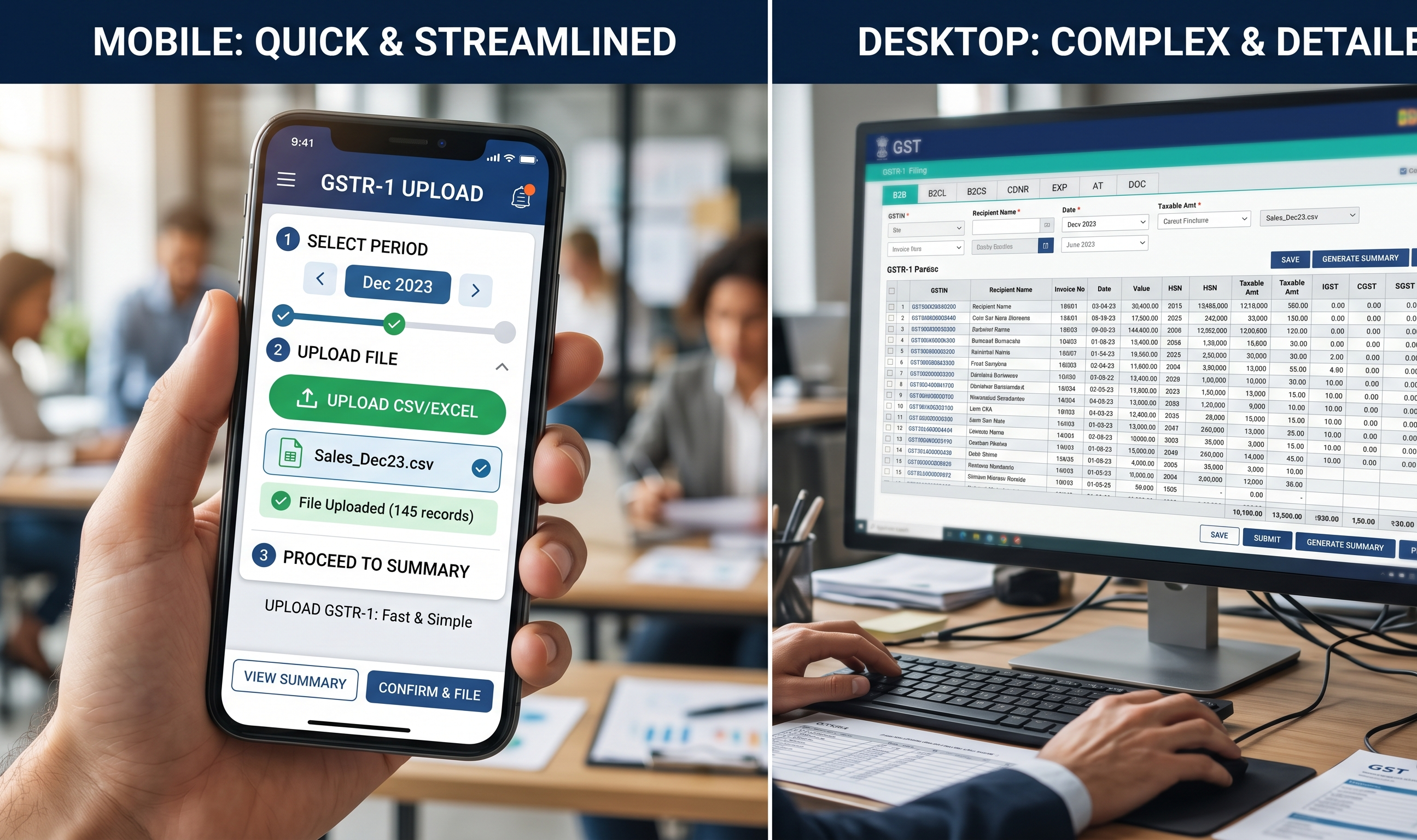
Tally Mobile25 April 2026
A mid-sized distributor — say ₹15 crore turnover, 80 to 120 retail parties, 30 to 50 B2B invoices a day — carries roughly this monthly compliance load:
Read post →
Market Reality25 April 2026
India has roughly 450,000 to 500,000 active distributors and several million wholesalers, by industry estimates. Across this base, the rough operational rhythm of how Indian distributors manage collections breaks into three tiers.
Read post →
Comparisons25 April 2026
Livekeeping's current ladder is ₹2,500 Growth, ₹4,000 Pro, and ₹6,000 Pro Plus. It is a strong middle layer for distributors who need mobile voucher creation and GST workflows, but collections-heavy teams still outgrow it when payment collection, reconciliation, and dispatch automation become the bottleneck.
Read post →
How-To25 April 2026
An outstanding payment reminder app is a software layer that tracks every open invoice across every party, sends structured reminders at the right intervals, pauses those reminders automatically when the invoice is paid, and keeps the reconciliation back to Tally or another ledger system in real time.
Read post →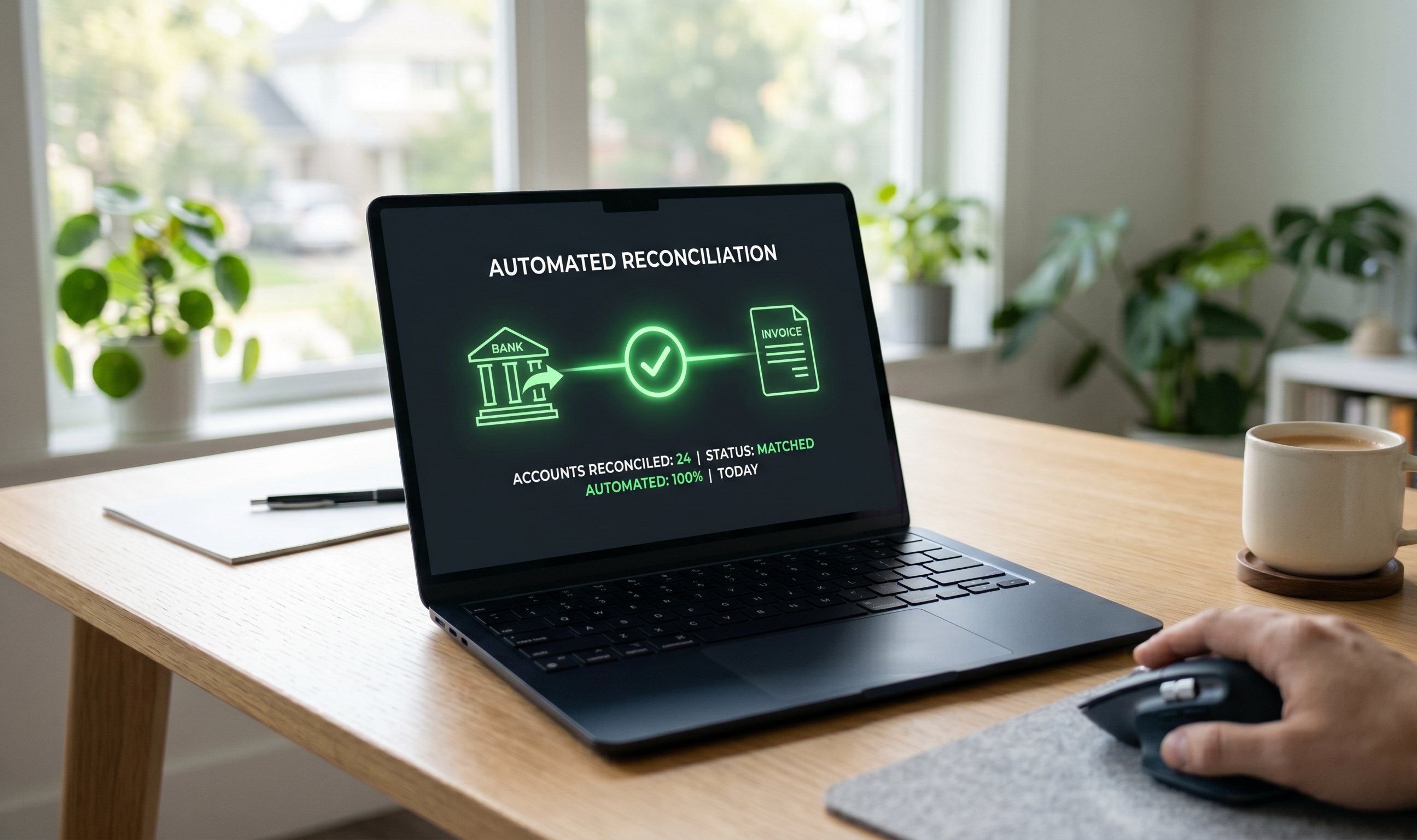
Market Reality25 April 2026
Margins of 3 to 5%. Credit terms of 30 to 90 days. Customer concentration risk on 20 to 40 parties that each owe somewhere between ₹50,000 and ₹8 lakh. This is the shape of most Indian distributor balance sheets.
Read post →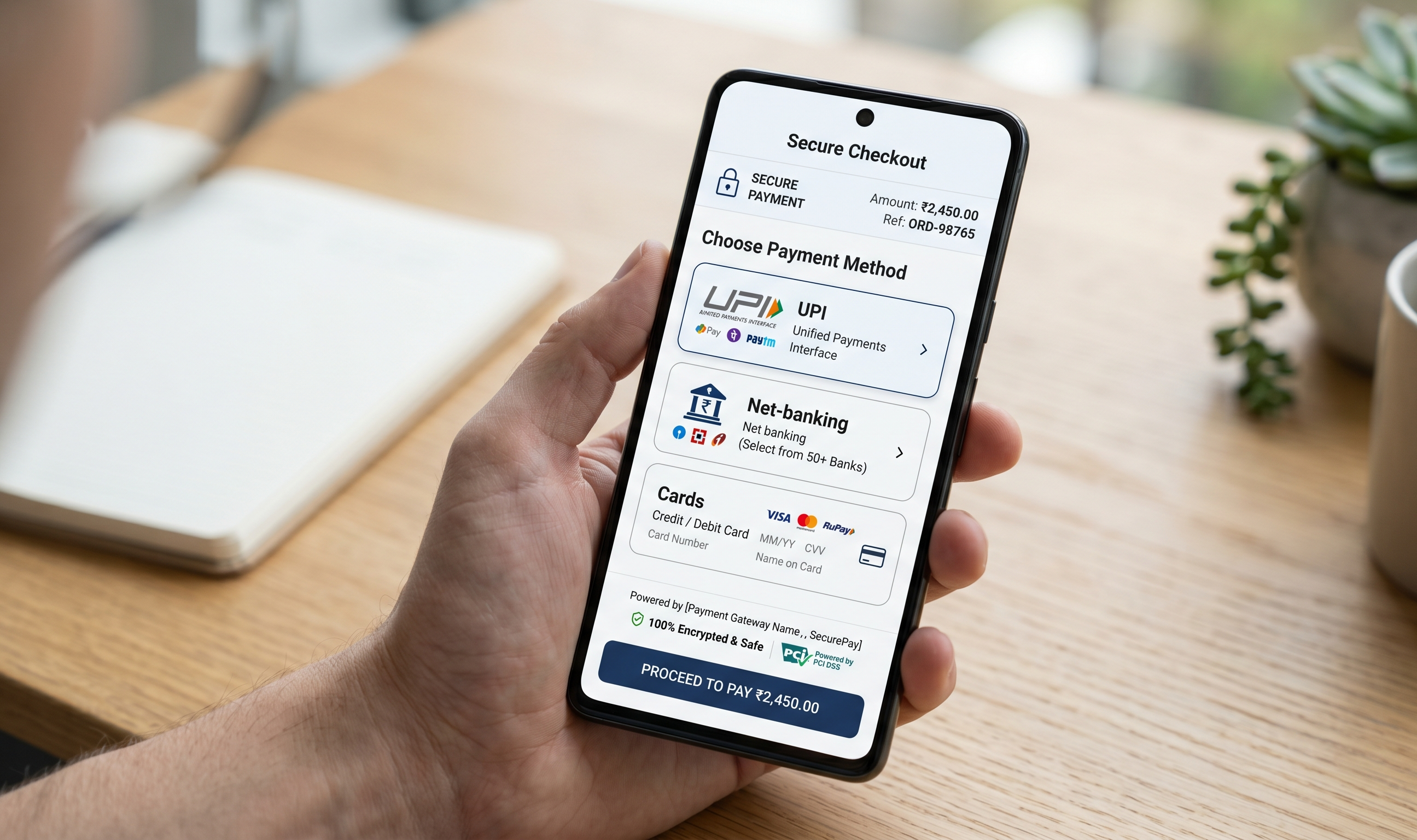
Market Reality25 April 2026
A payment gateway processes the transaction between the customer's bank and yours. For an Indian MSME, the gateway is the layer that lets you accept UPI, cards, net-banking, and (increasingly) BNPL on a single integration. Razorpay, Cashfree, PayU, and Paytm for Business are the dominant gateways serving the MSME and SMB segment.
Read post →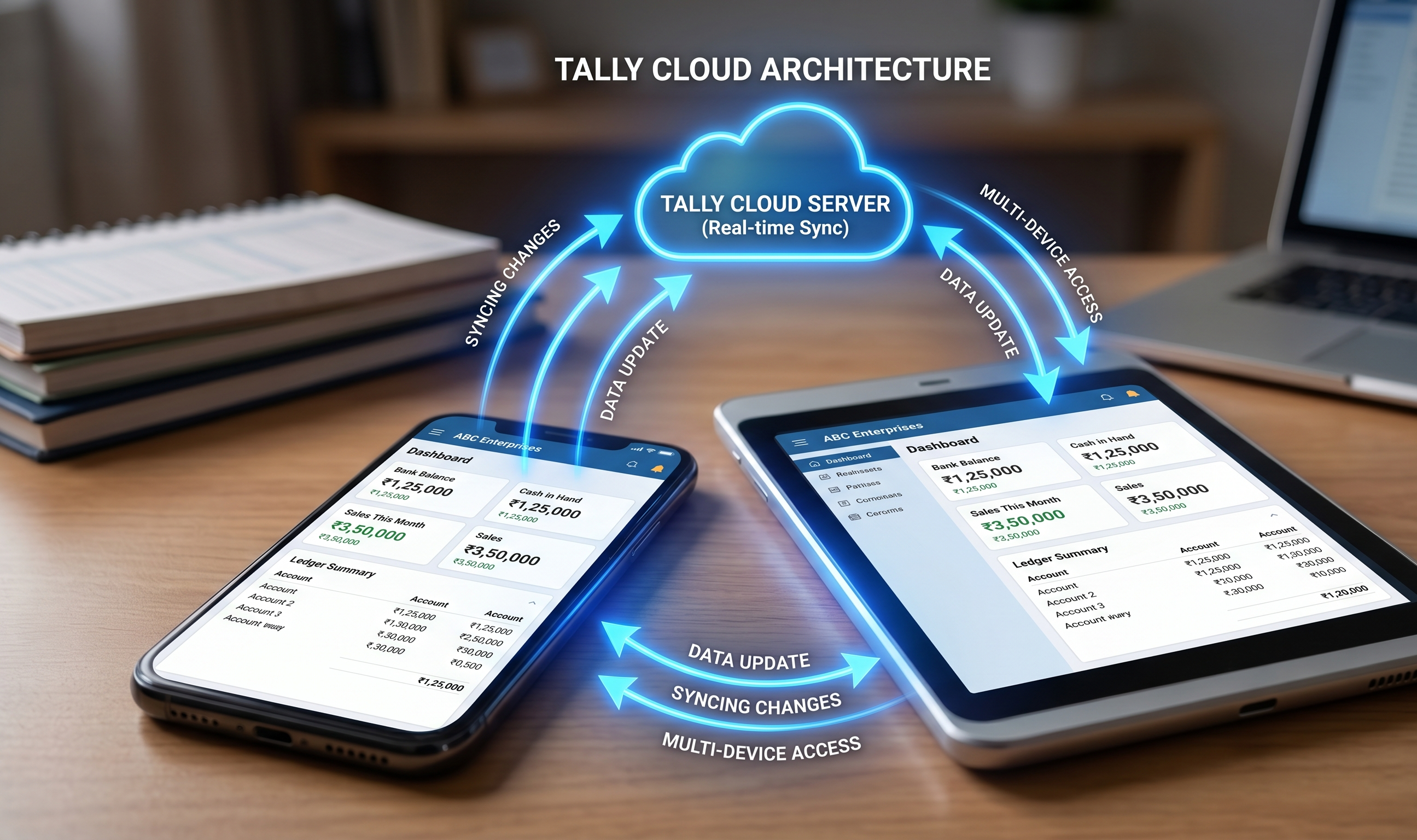
How-To25 April 2026
A UPI payment link is a URL that, when tapped on a phone, opens directly in PhonePe, Google Pay, Paytm or any UPI app, with the amount and merchant details pre-filled. The customer reviews, taps pay, authorises with their PIN, and the money arrives in your bank account in seconds.
Read post →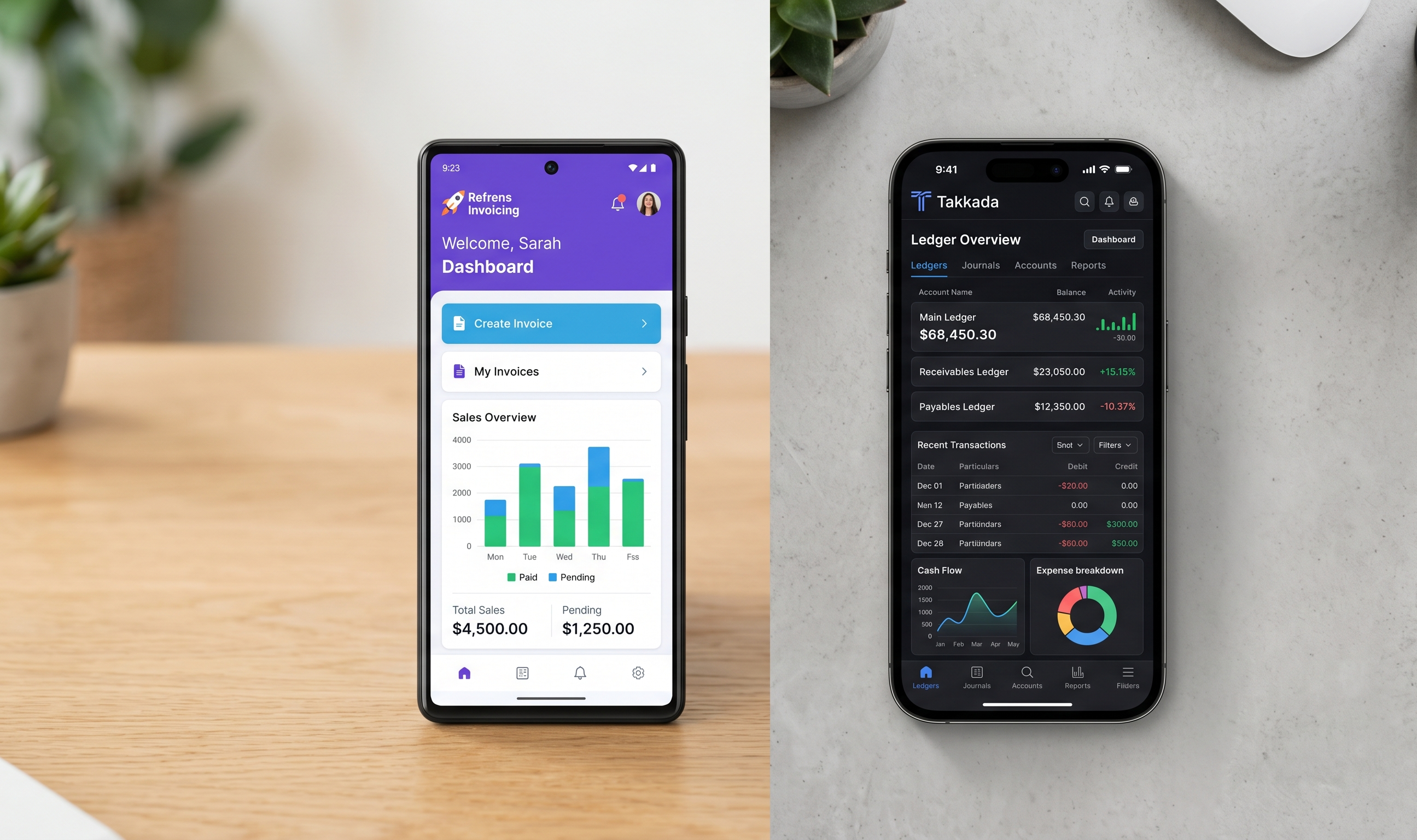
Comparisons25 April 2026
Refrens is a cloud-native invoicing, quotation, and payment platform for service businesses and light B2B sellers. It offers GST-compliant invoices, online payment collection, client management, proposal-to-invoice workflows, and basic accounting. Popular with agencies, consultants, freelancers, SaaS sellers, and small service firms. It is mobile-and-web, does not require a desktop install, and does not integrate with Tally.
Read post →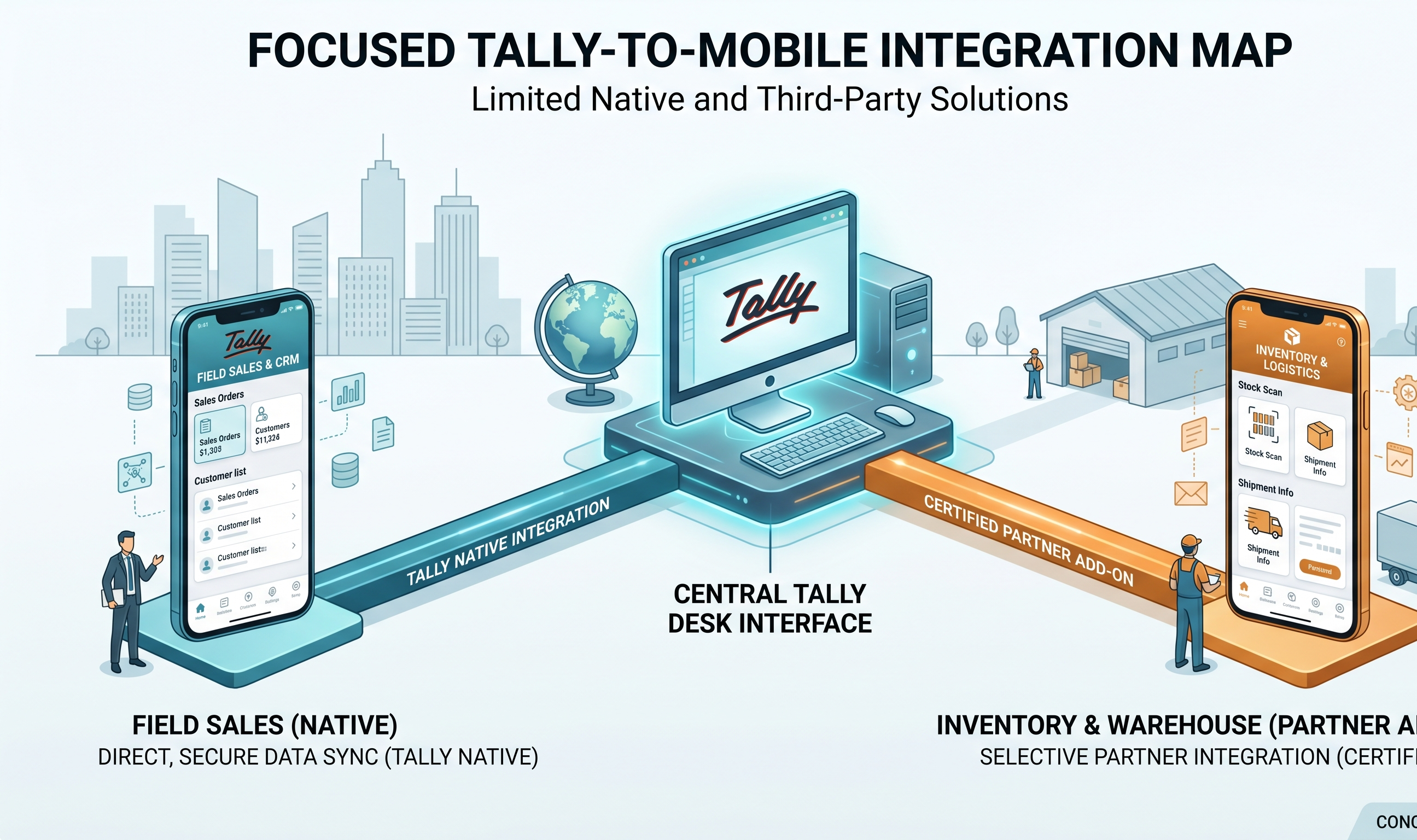
Tally Mobile25 April 2026
Tally Prime is Windows desktop software. Tally Solutions, the company, does not publish a cloud-native version. So when an Indian distributor sees "tally cloud" on a website or in a reseller pitch, what is being sold is almost always one of two things.
Read post →
Market Reality25 April 2026
Search traffic for the phrase "tally mobile app India" spiked around 2017 when Biz Analyst crossed a million downloads on the Play Store. Since then, a whole market of add-ons has grown up around Tally Prime, most built by Tally Certified Partners or third-party SaaS companies targeting the 28,000-plus certified Tally partner network.
Read post →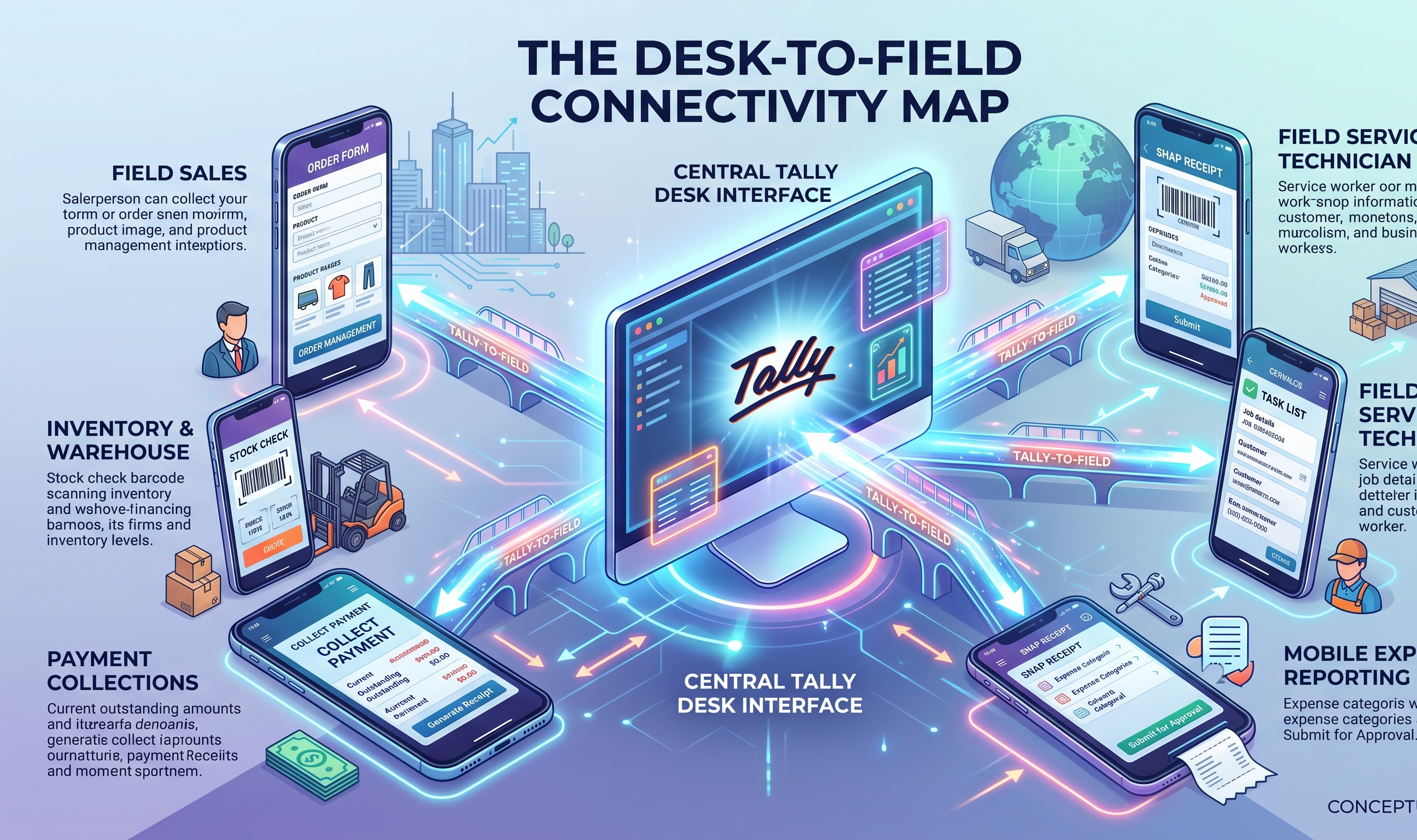
Tally Mobile25 April 2026
Tally Prime, and before it Tally.ERP 9, is built for Windows. The data folder lives on a single machine and multi-user licences assume a desktop keyboard-and-mouse workflow on a LAN. There is no official Tally mobile client, and that is a design decision going back to the late 1990s.
Read post →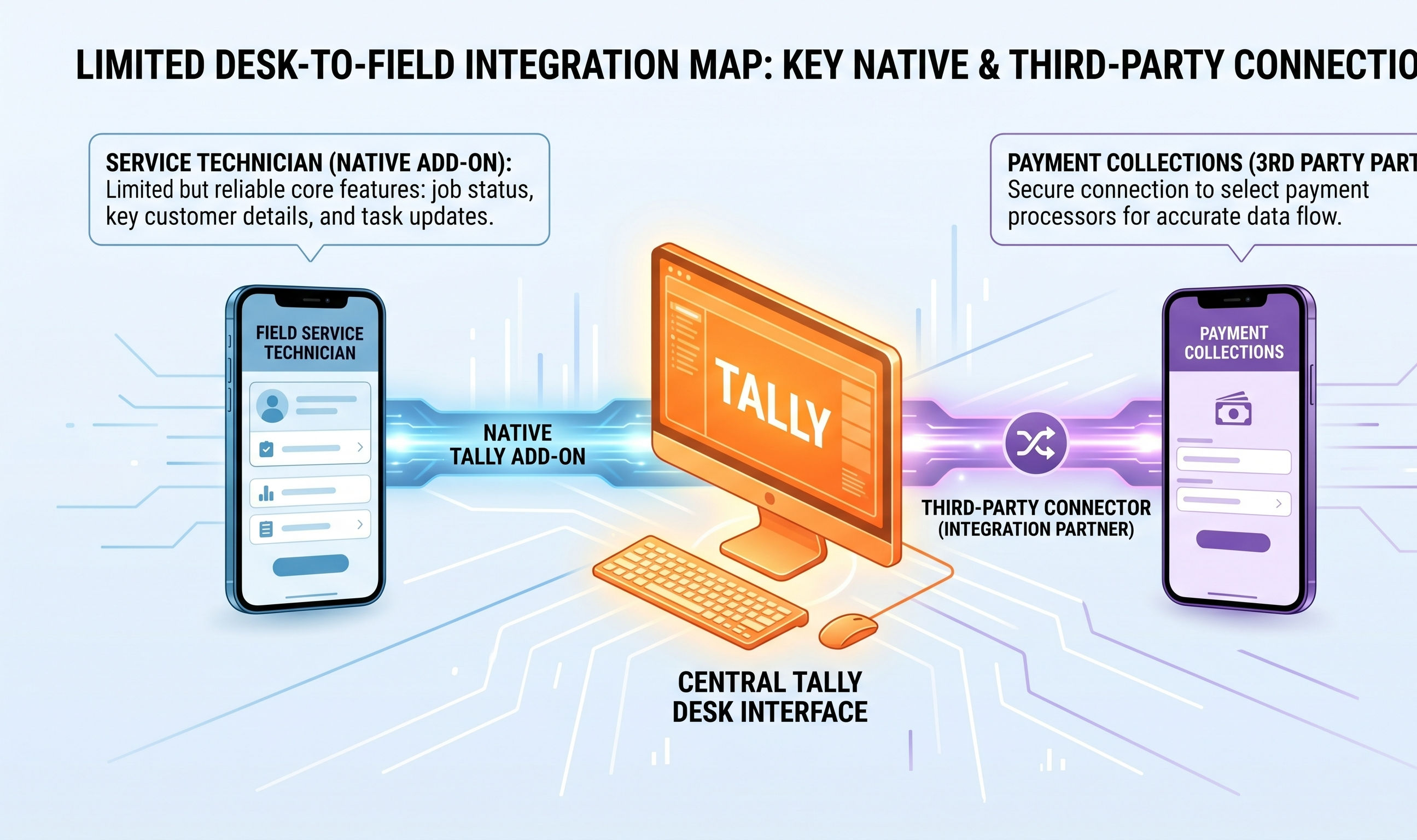
Tally Mobile25 April 2026
Short answer: no. Tally Solutions, the company behind Tally Prime, does not publish a native Android or iOS client. Tally Prime is a Windows desktop product, and the data folder sits on a single machine with a multi-user or single-user licence. That architecture goes back to the late 1990s and Tally has not signalled a native mobile build.
Read post →
Tally Mobile25 April 2026
First, retailers now juggle more distributors. The average kirana or wholesale buyer buys from 7 to 12 distributors across categories, each extending 30 to 60 days of credit. Your invoice is one of dozens competing for the retailer's attention at month-end.
Read post →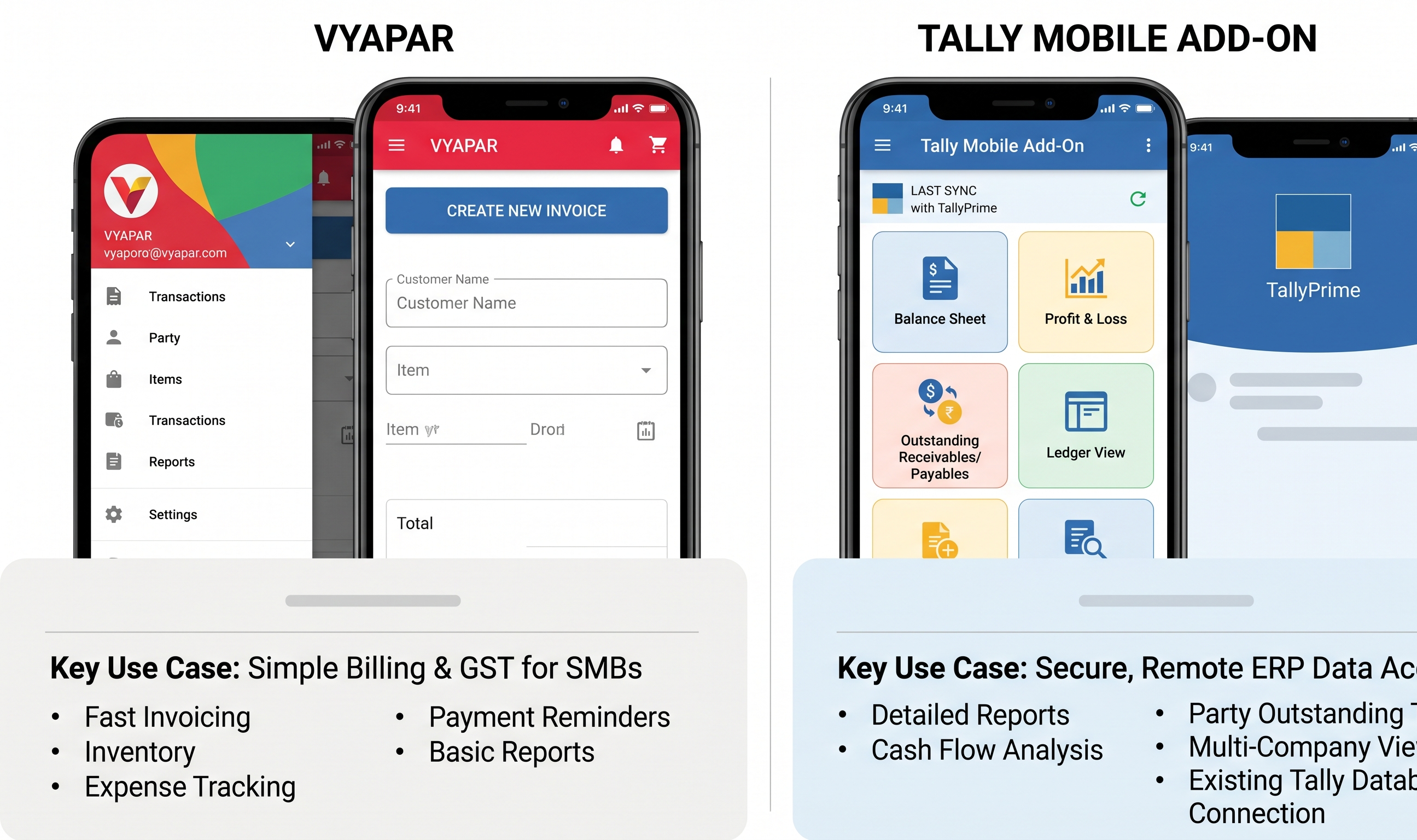
Comparisons25 April 2026
Vyapar is a billing, invoicing, and inventory app popular with small retailers, solo business owners, kirana shop-keepers, and micro-businesses. It is available on Windows desktop, Android and iOS, with strong offline capability and a clean, simple UI. It handles GST-compliant invoices, basic inventory, party ledgers, and some payment-link integration.
Read post →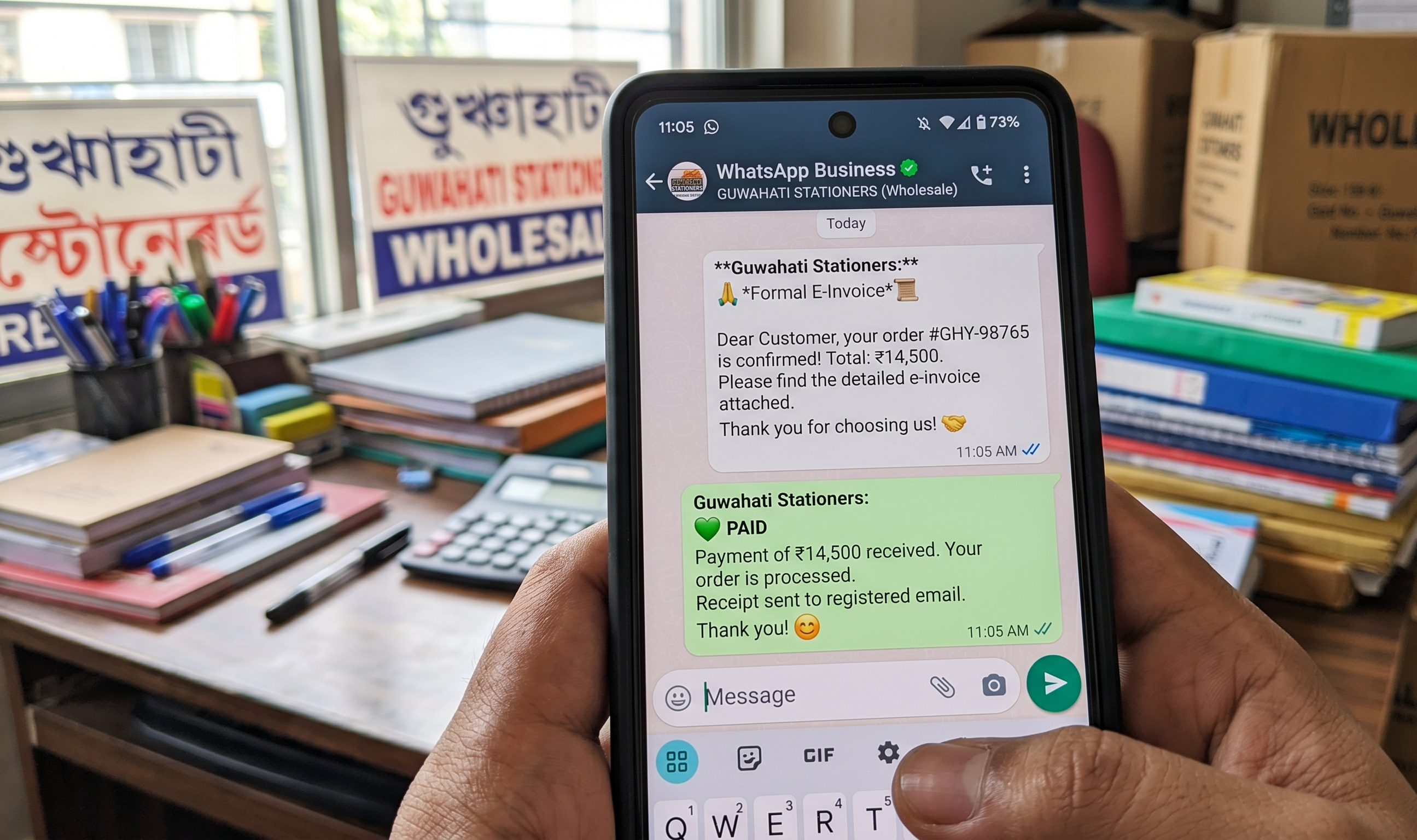
How-To25 April 2026
Pick up your phone, try calling five retailers in Barpeta or Dibrugarh right now and asking for ₹45,000 pending since last month. You will get three voicemails, one "bhaiya, shaam ko" and one who actually picks up. This is the 2026 reality of B2B collections.
Read post →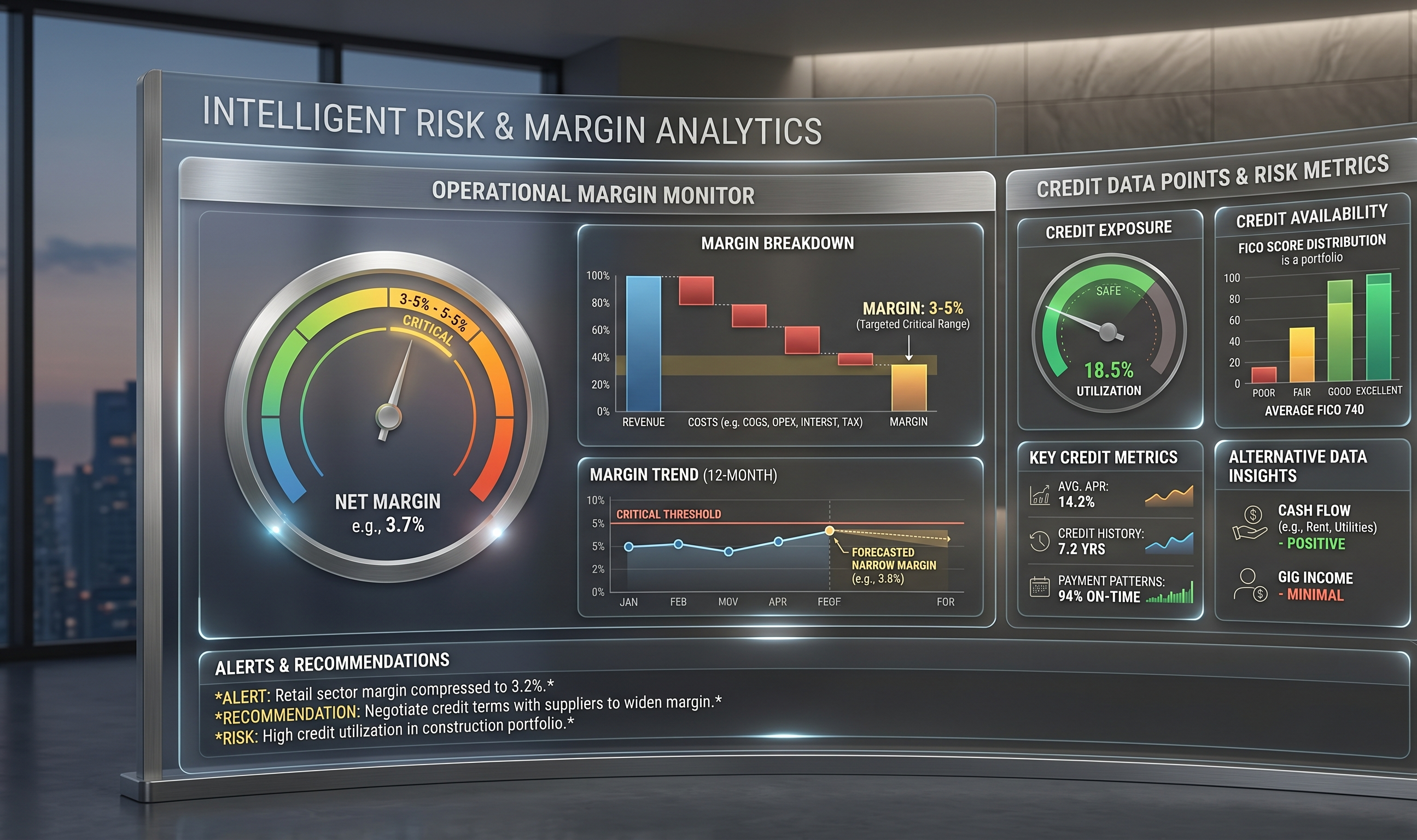
Market Reality25 April 2026
An Indian wholesaler — call it a ₹15 crore turnover distributor of FMCG goods in a Tier 2 city — runs on roughly this rhythm. They buy goods from 8 to 15 brands on 30-day credit terms. They sell those goods to 80 to 200 retailers on 45 to 60-day credit terms. They earn a 3 to 5% gross margin, which after operating costs (rent, salaries, transport, GST compliance) leaves a 1 to 2% net.
Read post →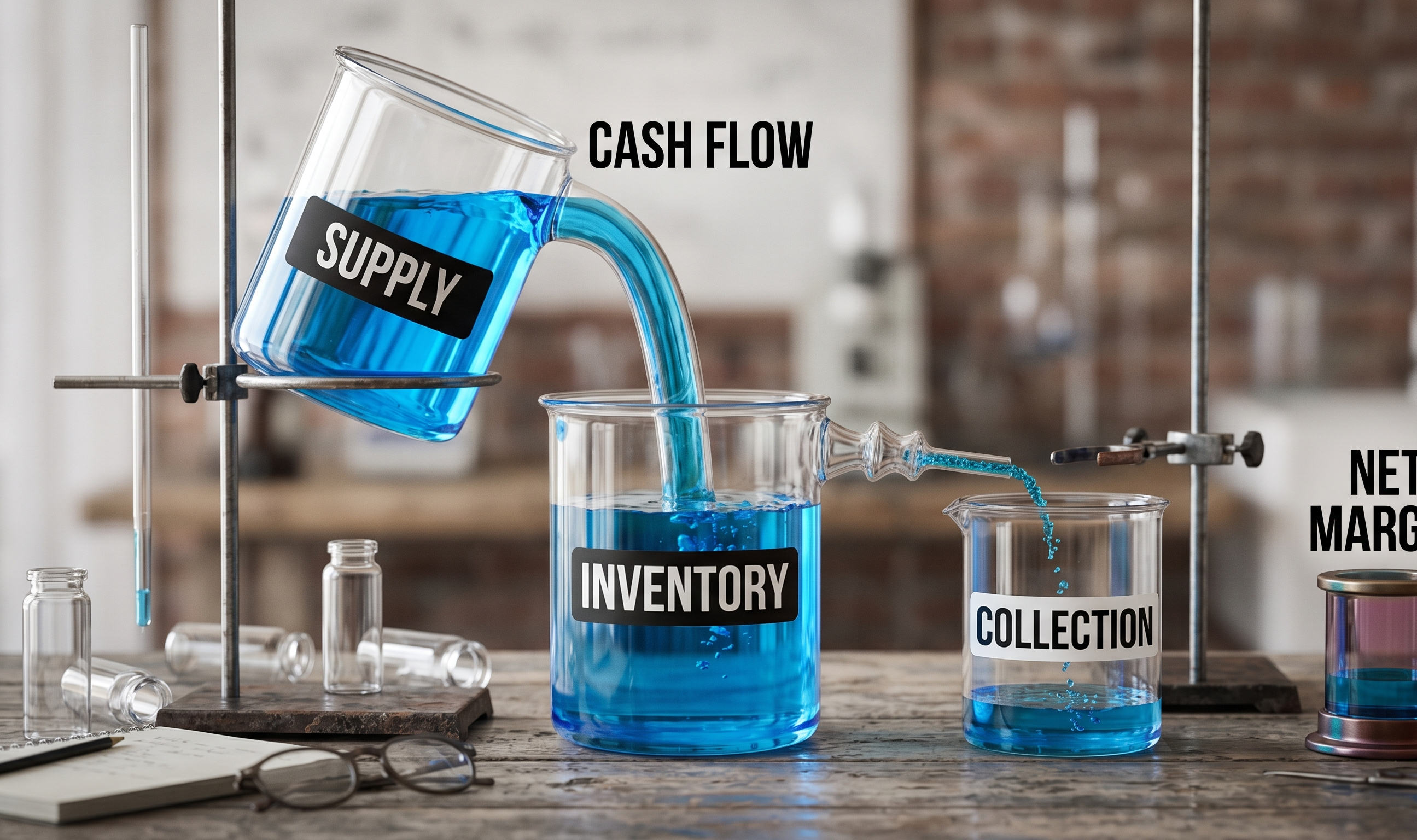
Collections23 April 2026
Most distributors know exactly who owes money. The problem is collecting it without spending the whole day on the phone. The gap between knowing and collecting is where cash flow dies.
Read post →